
September 3, 2026
ForgeStop is a finalist in two CPHI Pharma Awards 2026 categories — Digital Transformation and Packaging Innovation. Here's what the judges saw.
ForgeStop has been named a finalist in two categories at the CPHI Pharma Awards 2026: Digital Transformation and Innovation in Drug Delivery, Devices and Packaging.
Winners are announced on 6 October, 18:30–20:00, at the Supply and Formulation Excellence Theater, Hall 2, on the opening evening of CPHI Milan.
Two shortlists in one year is a good day for a company our size. But the more interesting thing is which two.
The two entries look, on paper, like different products.
Under Digital Transformation: the ForgeStop Connected Products Platform — NFC Authentication.
Under Innovation in Drug Delivery, Devices and Packaging: Secure Connected Packaging for Pharmaceutical Track-and-Trace and Authentication, a joint entry with EM Microelectronic.
They are not different products. They are the same tag, judged twice. Full details are on the official CPHI Pharma Awards page.
For most of the last decade, pharma bought authentication and digital transformation from different vendors, on different budgets, with different business cases.
Authentication was a security line item. It answered one question — is this real? — and it answered it at one point in the chain.
Digital transformation was a marketing and compliance line item. It answered a different question — what does this product know, and who can read it?
That separation is now expensive and unnecessary. The chip that proves a pack is genuine is the same chip that serves the leaflet, carries the GTIN, logs the tamper event, and hands a regulator an audit trail. One encoding pass. One tag. One dataset.
That is why the same submission reads as packaging innovation to one judging panel and digital transformation to another. Both panels are looking at the same object from opposite ends.
👉 Related reading: The Connected-Product Layer: GS1, Traceability, ePI in One Tap to a Full Digital Experience — How a single tap resolves identity, traceability and regulated product information without asking the patient to install anything or the manufacturer to run three systems.
The packaging entry is a joint submission with EM Microelectronic, and that partnership is the technical core of it.
EM’s EM4425 is a dual-frequency chip — NFC and UHF in one silicon die. The practical consequence is that a warehouse can read a pallet at distance over UHF while a pharmacist, a clinician or a patient taps the same pack with a phone over NFC. Same unique identity. Same encoding run. No second label, no second inventory of tags, no reconciliation between two ID schemes that were never designed to agree.
ForgeStop supplies the platform above it: encoding at production scale, tamper logic, content and language management, role-based governance, and the audit controls that make the whole thing defensible when someone asks how a record came to exist.
Neither half is the product. The pairing is.
👉 Related reading: A New Era of RFID in Healthcare: What’s Actually Changing on the Pharma Package — Why dual-frequency changes the economics of pharma tagging, and what it means for teams already running UHF in the warehouse and nothing at all on the pack.
Awards panels are unsentimental about pilots. What they wanted was deployed product.
The evidence behind the packaging entry is a nationwide pharmaceutical rollout in Mexico — a manufacturer running connected authentication across its commercial portfolio, in market, at production volume, with clinician-facing communications built around it. Not a demo. Not a proof of concept with a launch date attached. Product on shelves that patients and prescribers can already tap.
The counterfeit problem in Mexican pharmacies is not theoretical, and neither is the response.
👉 Related reading: Mexico’s Counterfeit Pill Crisis: How Tap-to-Verify Stops Deadly Fakes — The market conditions that made a nationwide NFC authentication rollout the rational commercial decision rather than a brand-protection nice-to-have.
Neither shortlist happened in a vacuum. Europe is in the middle of turning the medicine package into a digital object by law.
The EU’s electronic product information (ePI) programme is guided by key principles published in 2020 by the European Medicines Agency, the Heads of Medicines Agencies and the European Commission. EMA and the EU medicines regulatory network made a draft implementation roadmap available on 20 March 2026 for coordinated ePI delivery across the network, aligned to the incoming pharmaceutical legislation. The pilot phase across Denmark, the Netherlands, Spain and Sweden closed in August 2024, with results published in December 2024.
Separately, the Ecodesign for Sustainable Products Regulation entered into force on 18 July 2024, introducing the Digital Product Passport, with the ESPR and Energy Labelling Working Plan 2025–30 adopted on 16 April 2025.
Read those together and the direction is unambiguous. Regulated product information is moving off the folded paper leaflet and onto a carrier the pack itself provides. Manufacturers who already have a connected tag on the pack will treat ePI as a content-management exercise. Manufacturers who do not will treat it as a packaging re-engineering project with a regulatory deadline attached.
👉 Related reading: The ePI Roadmap Is Here: What Pharma Manufacturers Must Do Before Q4 2026 — A practical compliance checklist for teams working out what ePI requires of their labelling, artwork and content operations, and in what order.
The most common objection to connected packaging is not cost. It is disruption — the assumption that adding a chip means new lines, new applicators, requalification, and a validation programme nobody has budget for.
It does not. Existing labels convert. The same applicators run them. The chip embeds during lamination or sits inside the tamper-evident seal, adding less than 0.3mm of thickness. The artwork stays. The line speed stays.
Upgrade-in-place, not rip-and-replace. That is why the packaging category and the digital transformation category ended up looking at the same submission — because the digital transformation happens without the packaging transformation anyone was dreading.
ForgeStop is on stand 8S27 at CPHI Milan, 6–8 October, Fiera Milano, with live product on the stand — real packs, in market, that you can tap yourself.
If ePI, serialization, or connected authentication is on your 2027 plan and you would rather see it working than read about it, come and find us.
Talk to ForgeStop about connected pharmaceutical packaging →
Protect. Connect. Experience.

June 4, 2026
EMA's March 2026 ePI roadmap sets a Q4 go-live for vaccines and oncology. Here's the compliance checklist pharma manufacturers need to act on now.

March 4, 2026
NFC authentication secures the product. Dual-frequency RFID smart labels secure the entire supply chain — from batch production to warehouse to patient.
July 28, 2025
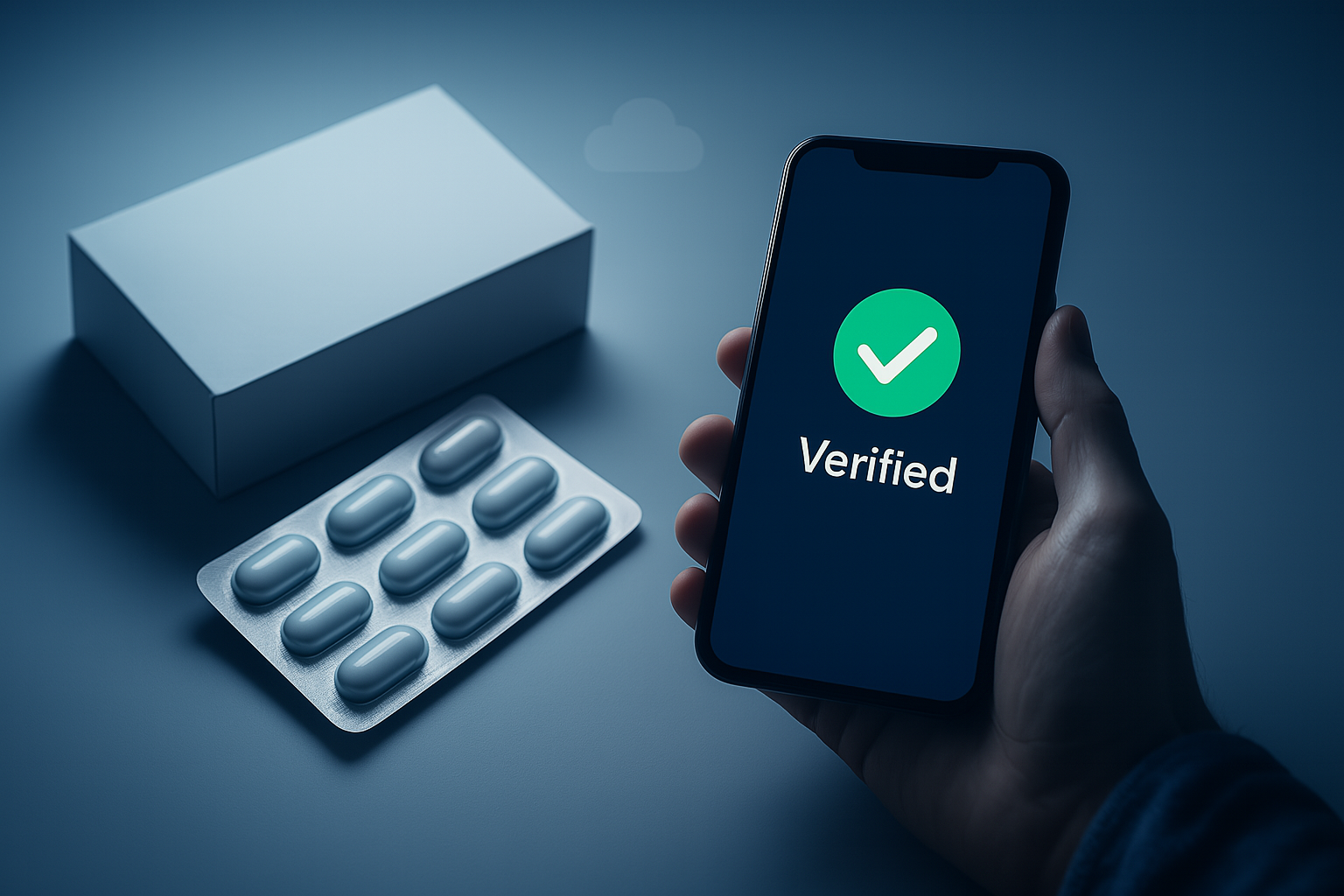
Mexico’s counterfeit pill crisis escalates with 68% of pharmacies selling fakes—ForgeStop’s tap-to-verify NFC packaging stops deadly counterfeits at the source.

.svg)
.svg)

.svg)
.svg)