
January 14, 2026
Printed smart labels embed NFC into existing pharma packaging — no new equipment needed. Learn how to deploy compliant, scalable smart labeling in 2026.
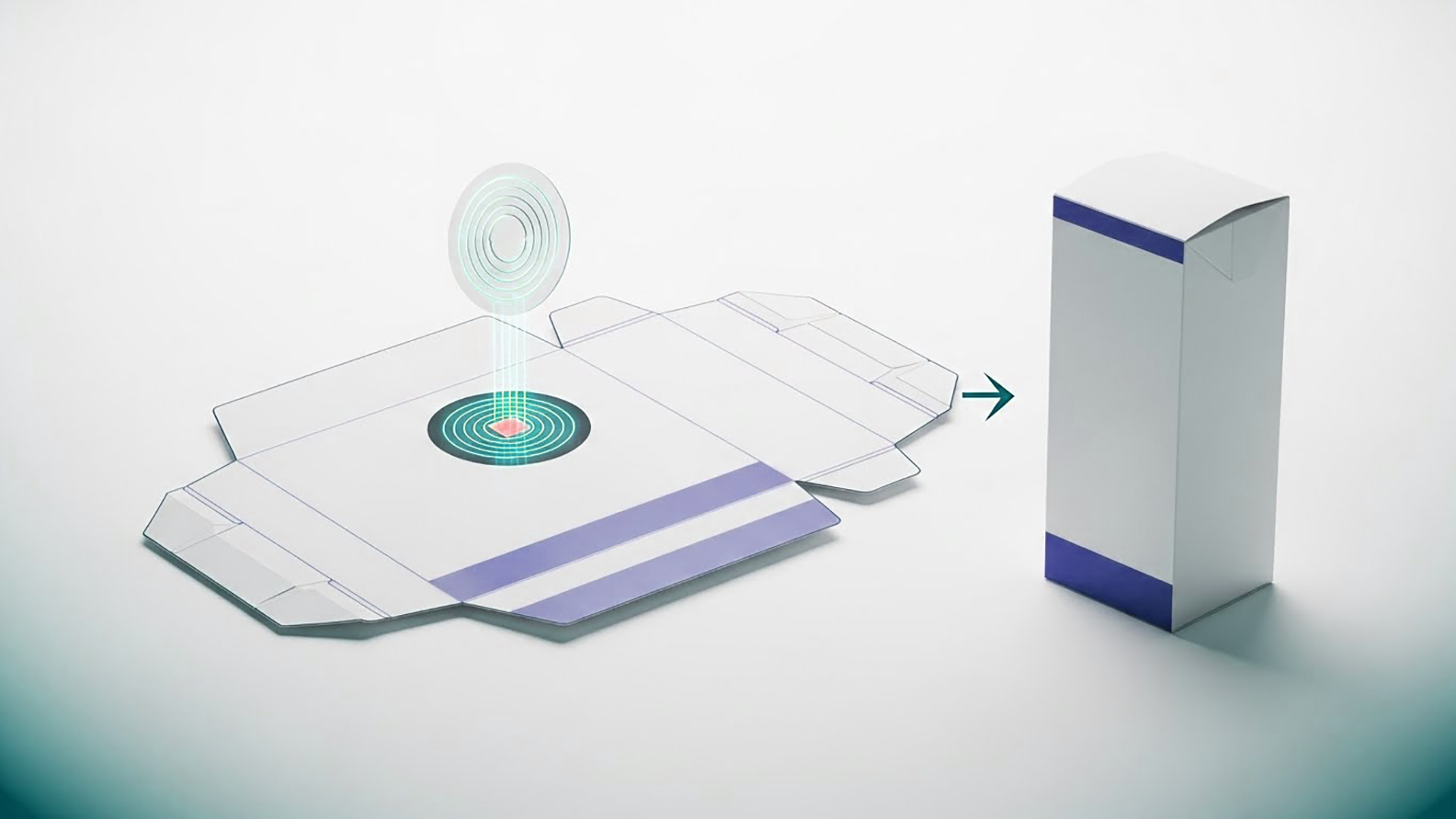
Here's what nobody tells you about smart labels: you probably don't need to change your packaging line.
The assumption that NFC-enabled pharmaceutical packaging requires new equipment, new applicators, or months of revalidation has killed more innovation projects than budget constraints ever did. It's also wrong.
Modern printed smart labels embed NFC inlays directly into your existing label construction. Your current label stock gets converted — same adhesive, same face material, same die-cut dimensions — with a chip laminated invisibly between layers. Your applicators don't notice the difference. Your operators don't need retraining. Your line speed doesn't drop.
The same principle applies to secondary packaging. NFC chips can be embedded inside existing carton structures, integrated into tamper-evident seals, or applied as intelligent closure stickers that replace security labels you're already using.
This isn't a rip-and-replace transformation. It's an upgrade-in-place — and it's why pharmaceutical manufacturers are moving faster on smart labeling than anyone predicted.
The numbers tell the story. According to Mordor Intelligence, the healthcare and pharmaceutical smart label segment is growing at a 19.08% CAGR through 2031 — the fastest growth rate across all industries adopting this technology. NFC technology specifically is projected to grow at 19.52% CAGR through the same period.
This isn't speculative adoption. It's a regulatory and commercial inevitability driven by three converging forces:
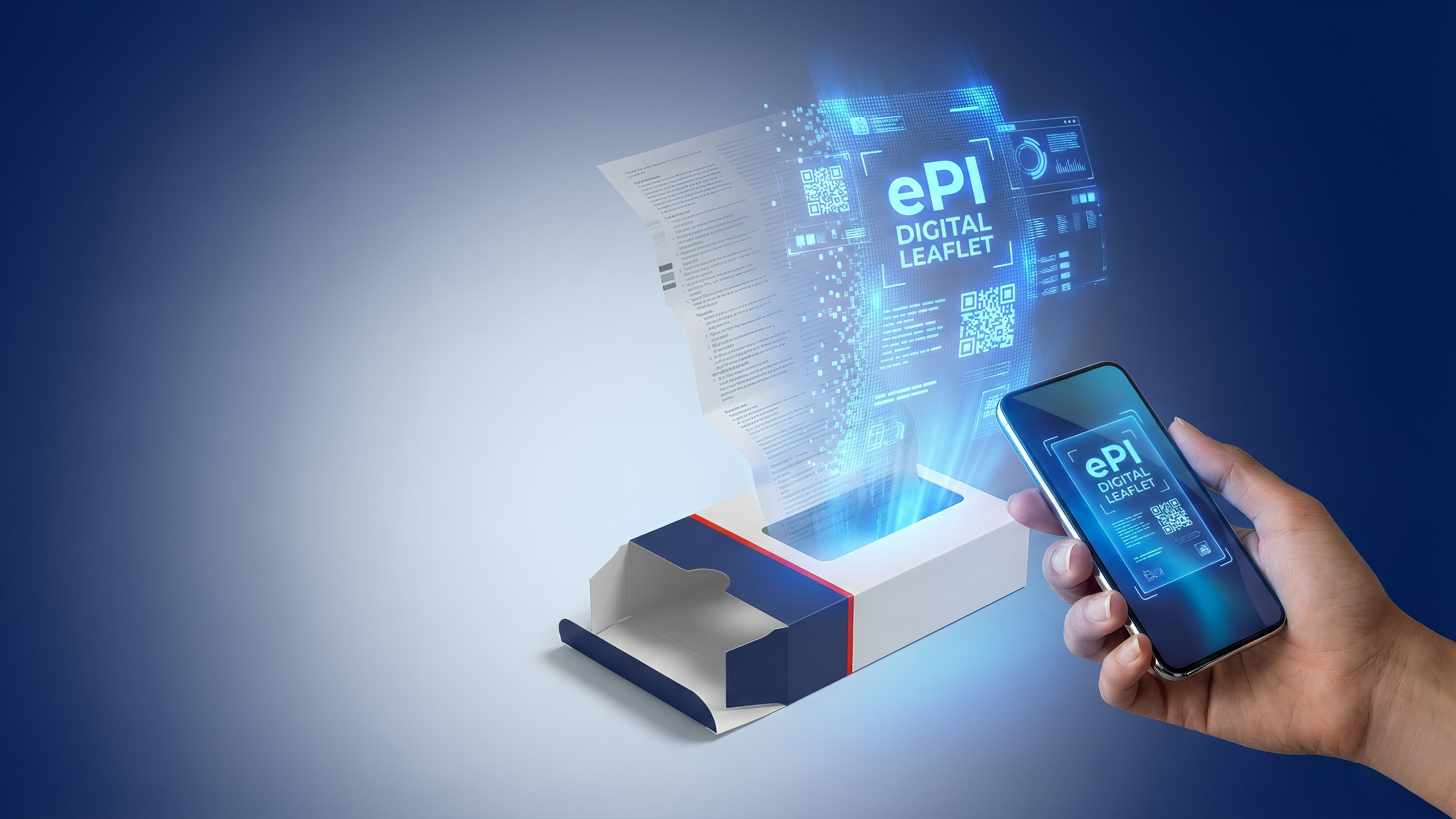
Electronic Product Information (ePI) is rolling out now. The EMA's successful pilot across Denmark, Netherlands, Spain, and Sweden concluded in 2024, with phased implementation beginning in 2025. Voluntary adoption for centrally authorized products is already underway, with expansion to nationally authorized products following as member states achieve readiness. Smart labels provide the physical-to-digital bridge that makes ePI accessible at the point of care.
Digital Product Passports arrive in 2027. The EU's DPP mandate will require machine-readable, updateable product data on pharmaceutical packaging. Static printed labels cannot meet this requirement. NFC-enabled labels can.
Serialization enforcement is tightening. The FDA's DSCSA requirements and EU FMD mandates demand batch-level traceability that QR codes alone struggle to deliver at scale — particularly when verification volumes strain optical scanning systems.
👉 Related reading: ePI Is Here: How ForgeStop's Smart Label Platform Delivers Compliant Digital Medicine Information at Scale — Explore how ForgeStop's InfoTap platform enables real-time, multilingual, audit-ready ePI delivery across global pharmaceutical operations.
Printed smart labels combine three technology layers into a single pharmaceutical packaging component:
The printed layer carries everything your current labels already include: regulatory-compliant text, dosage information, batch and lot numbers, expiration dates, GS1 DataMatrix codes, and brand graphics. Nothing changes about what gets printed.
The smart layer is an NFC or RFID inlay — a thin, flexible antenna connected to a microchip — laminated between the label's face stock and adhesive layers. This adds less than 0.3mm of thickness in most constructions. The chip stores a unique identifier and can be read by any NFC-enabled smartphone without requiring a dedicated app.
The digital layer connects that physical chip to a cloud backend that delivers dynamic content: electronic product information, authentication verification, patient instructions, recall alerts, supply chain data, and compliance documentation.
The result is a label that looks and applies exactly like your current labels but functions as an intelligent, connected, updateable data carrier.
Pharma packaging teams have valid concerns about any change to validated production processes. The regulatory burden alone — updating batch records, requalifying equipment, documenting change controls — can delay innovation indefinitely.
Printed smart labels sidestep most of these barriers because they're designed to integrate, not disrupt.
Your existing label supplier converts your current label specifications by embedding an NFC inlay during the lamination process. The finished label has the same:
The only difference is a thin, flexible NFC chip sandwiched invisibly between layers.
Your label applicator sees no change. Your vision inspection system sees no change. Your operators see no change. But your product is now connected, authenticated, and ePI-ready.
For folding cartons, the integration options are even more flexible:
Embedded inlays — NFC chips glued inside the carton structure during manufacturing, invisible to the end user but scannable through the carton wall.
Smart tamper-evident seals — Replace existing security stickers with NFC-enabled versions that serve dual duty: tamper detection AND authentication. One component, two functions, zero additional steps.
Intelligent closure labels — Sealing stickers that patients tap to verify authenticity before opening. The authentication moment becomes part of the unboxing experience.
This means no carton redesign, no structural engineering, no new tooling. The smart layer rides on infrastructure you've already validated.
The bottom line: smart label adoption is a procurement decision, not a capital project. You're switching suppliers (or asking your current supplier to convert), not rebuilding your packaging line.
👉 Related reading: Smart Labels in Pharma: The Sustainable Cure for Counterfeiting and Waste — Discover how smart labels reduce pharmaceutical waste, cut recall costs, and support sustainability goals while strengthening anti-counterfeiting defenses.
Once deployed, printed smart labels unlock capabilities that static packaging simply cannot deliver:
Real-Time Product Information Updates
When dosage guidance changes, when new contraindications emerge, when regulatory text requires revision — the printed label stays the same, but the digital content updates instantly. No reprinting. No inventory destruction. No distribution delays.
Tap-to-Authenticate Patient Verification
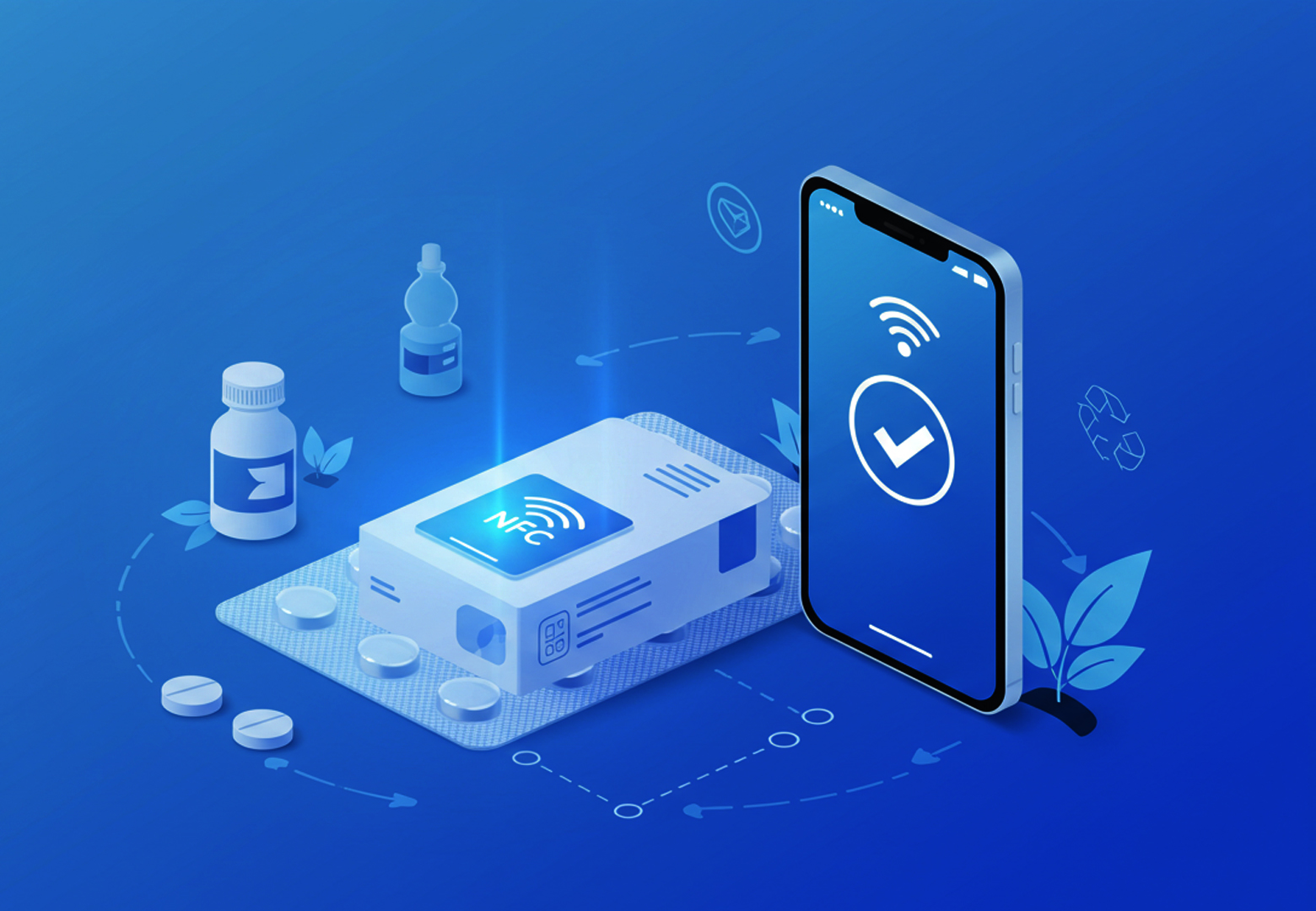
Patients tap the label with their smartphone. The NFC chip responds with cryptographic verification that confirms authenticity in under one second. No app download required. No QR code to photograph. No manual code entry. Just tap and trust.
Multilingual ePI at Point of Care
A single NFC label can deliver product information in dozens of languages based on the user's device settings or location. The physical label doesn't need to change — the digital layer adapts automatically.
Supply Chain Visibility
Every tap creates a data point. Manufacturers gain visibility into where products are being verified, when, and by whom — without requiring retailers or patients to opt into tracking programs.
Diversion and Tampering Detection
NFC chips can be configured to detect if a seal has been broken, if a product has left its authorized distribution channel, or if verification patterns suggest diversion activity.
👉 Related reading: How NFC Works: The Simple Tap That Secures Brands, Products, and People — Understand the technology behind NFC authentication and why it outperforms QR codes for pharmaceutical security applications.
Not every smart labeling technology fits every use case. Here's how to think about the options:
QR Codes are low-cost and universal but offer zero cryptographic security. They can be photographed and reproduced, making them unsuitable as standalone authentication mechanisms. Best used for basic information delivery where counterfeiting risk is low.
NFC (Near-Field Communication) requires physical proximity (1-4 cm) to read, supports hardware-level encryption, and cannot be cloned by photographing. Ideal for patient-facing authentication where tap-to-verify simplicity matters.
UHF RFID reads at longer distances (up to 10+ meters) and supports bulk scanning of multiple items simultaneously. Ideal for warehouse logistics, pallet tracking, and inventory management — but less practical for consumer authentication moments.
Dual-frequency labels combine NFC for consumer authentication with UHF RFID for supply chain logistics in a single label. This delivers the best of both worlds: patient trust at the pharmacy counter AND operational efficiency in the distribution center.
Moving from pilot to full-scale deployment requires three things: supplier alignment, encoding infrastructure, and content management systems.
Supplier alignment means working with label converters who have NFC inlay embedding capabilities — or partnering with your current supplier to add this capability. Most major pharmaceutical label suppliers now offer smart label conversion services.
Encoding infrastructure handles the personalization of each NFC chip with unique identifiers during manufacturing. ForgeStop's BatchMaker system enables high-volume encoding at production line speeds, integrating with existing packaging equipment.
Content management ensures the digital experiences delivered via NFC stay current, compliant, and localized. ForgeStop's InfoTap platform manages ePI content, authentication workflows, and analytics dashboards — providing a single control plane for global smart label deployments.
The convergence of ePI implementation, DPP mandates, and serialization enforcement creates a narrow window for pharmaceutical manufacturers to adopt smart labeling proactively rather than reactively.
Companies that deploy printed smart labels now will:
Companies that wait will face compressed timelines, competing priorities, and the risk of playing catch-up while competitors establish market position.
The technology is proven. The adoption path is frictionless. The regulatory clock is ticking.
Ready to explore printed smart labels for your pharmaceutical packaging?
ForgeStop's connected products platform and smart label management system let you deploy NFC-enabled labels at scale, for future proof compliance, real-time authentication, and supply chain intelligence built in. Our team works with your existing label suppliers to convert current specifications, minimizing disruption while maximizing capability.
See it in action: ForgeStop is demonstrating this technology at PHARMAPACK Europe 2026 in Paris (Stand S01, Hall 4) — January 21-22.
.png)
June 4, 2026
Electronic Product Information (ePI) is reshaping pharma compliance. Discover how ForgeStop delivers real-time, multilingual, audit-ready ePI at global scale.
.png)
December 17, 2025
Visit ForgeStop at PHARMAPACK Europe 2026 (Stand S01) to see how our NFC smart labels power pharma authentication, anti-counterfeiting & ePI delivery.
October 1, 2025
Smart labels are transforming pharma by cutting waste, reducing recalls, and fighting counterfeits — while helping companies comply with global regulations.

.svg)
.svg)

.svg)
.svg)