
November 5, 2026
One tap on an AEL graded slab confirms the grade, shows if the case was opened, and flags lost or stolen cards. See how ForgeStop NFC works.
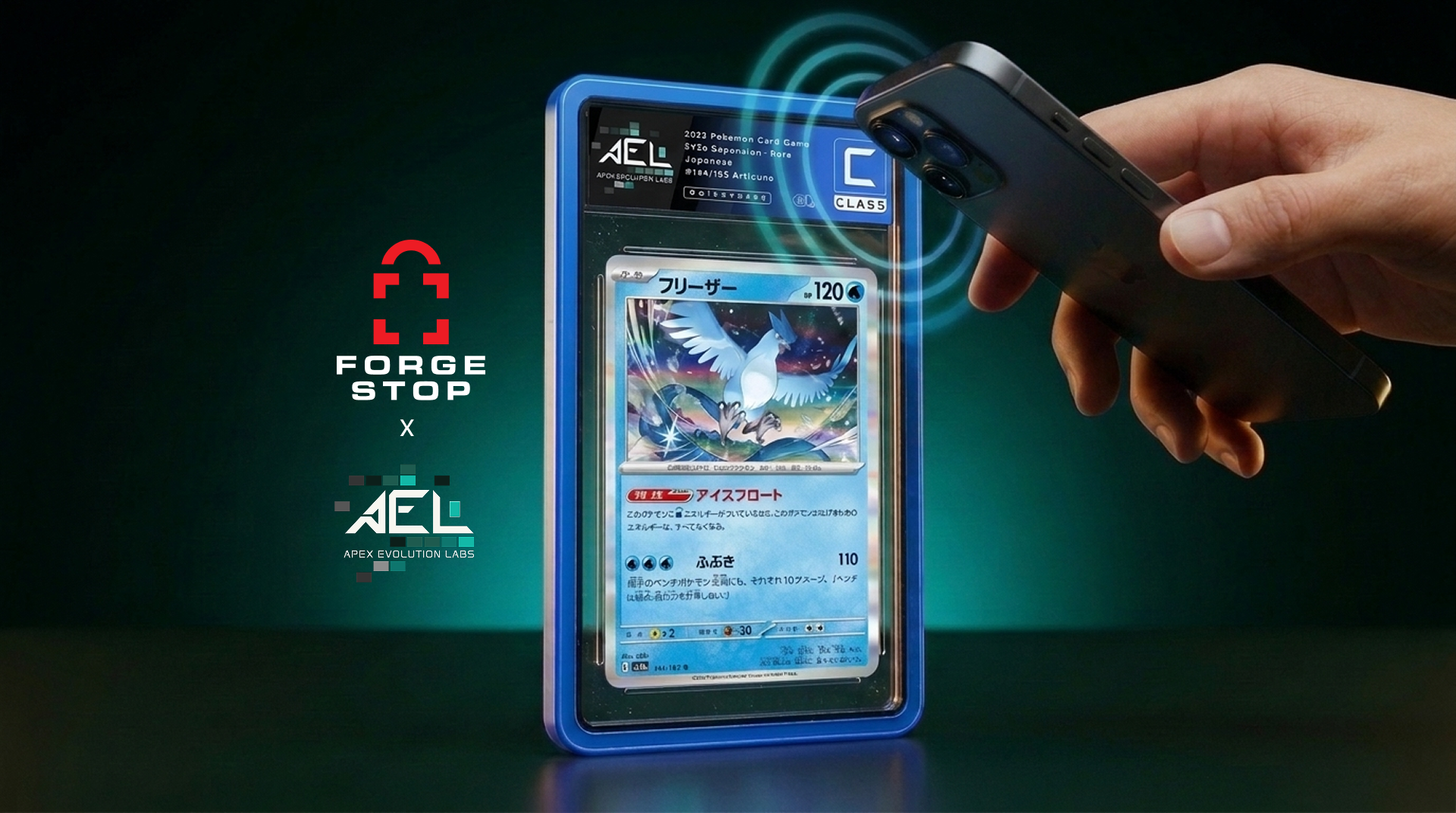
A graded card has always asked for trust. A printed label, a plastic case, a certificate number you can look up. For most of the hobby's history, that was the whole system.
Apex Evolution Labs (AEL) is changing what a grade can carry. Every AEL slab is now sealed with a ForgeStop InfoTap® NFC smart label: a secure digital identity unique to one card, linked to its AEL certificate, grade and the photographs taken in the AEL lab.
The result is a grade that proves itself every time someone taps it.
ForgeStop announced the launch with AEL on 5 November 2026. Read the full announcement on AP News.
A collector, dealer or buyer holds a phone to the slab. Within about a second, the tap answers three questions:
No app to download. No account to sign into. Any NFC-enabled smartphone works.
Each tap is answered with a dynamic, single-use cryptographic response that the ForgeStop platform validates before any result is shown. Copying the label's data does not produce a working clone, because a used response is already spent.
👉 Related reading: How NFC Works: The Simple Tap That Secures Brands, Products, and People: a plain-language guide to short-range NFC, what happens in the moment of a tap, and why it gives stronger protection than a printed code.
High-value cards move fast, and a stolen card rarely stays where it was taken. AEL owners can now report a card lost or stolen. Once it is flagged, that status appears to anyone who taps the slab, wherever the card resurfaces: at a show, in a shop or on a buyer's desk.
That changes the position of every buyer. Before money changes hands, one tap shows whether the card carries a reported history.
Privacy is built in. Ownership details and the full grading report stay behind a private owner PIN printed with the certificate. The public sees the card's status, never the owner's personal data.
The InfoTap label is integrated into the seal of the slab itself. If the case is ever opened, the label detects it, and every tap from that point on shows the slab as opened.
That matters because a genuine label on an opened case no longer vouches for what is inside. Now the tap says so. Each label is encoded and locked during production, so its identity cannot be altered once the slab is sealed.
👉 Related reading: QR Code vs NFC for Brand Protection: What's Best in 2026?: why a printed code can be photographed and copied, and where a cryptographic NFC tap adds the authentication and tamper evidence a code cannot.
As each graded card is sealed, its AEL certificate and InfoTap label are linked for life. The card gains a digital twin that travels with it through every sale, so the tenth buyer can check the same evidence as the first.
In a market where cards change hands many times, that continuity is the point. The grade no longer rests on a label staying unaltered or a serial number lookup. The slab confirms it.
👉 Related reading: How NFC and RFID Are Transforming Asset Tokenization in the Digital Age: how a secure chip ties a physical collectible to its digital record, so ownership and authenticity can be verified long after the first sale.
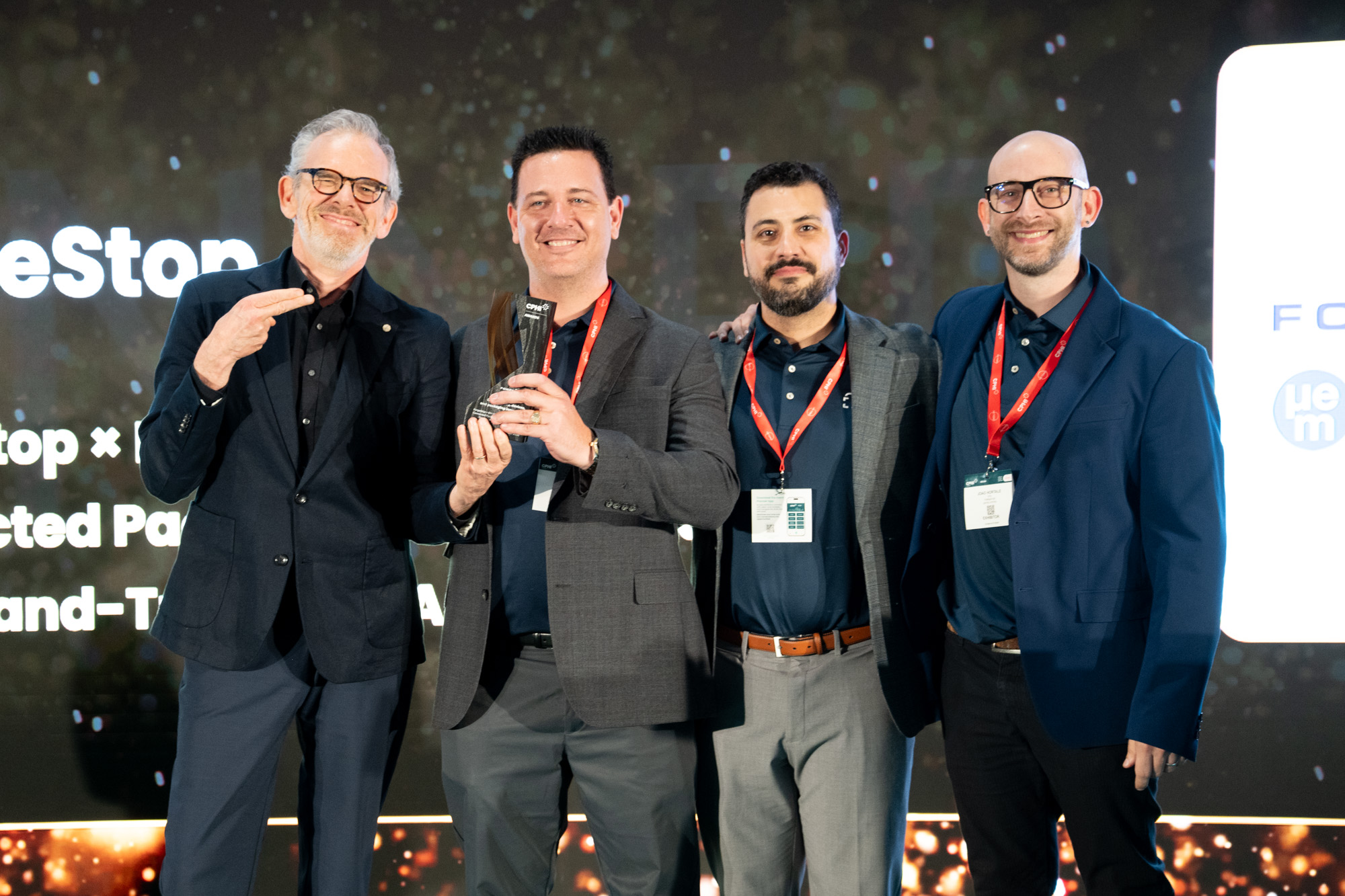
AEL runs on the same ForgeStop platform that secures products in pharmaceuticals, premium spirits and nutraceuticals. In October 2026, ForgeStop won the CPHI Pharma Award for Drug Delivery, Devices and Packaging Innovation for its secure connected packaging.
Collectibles share the core challenge those industries face: a product's value depends on proving it is real, and that proof has to survive every handoff. Graded cards are the first collectibles category on the platform. The same approach applies wherever a physical item carries value that depends on provenance.
“A grade is only as trustworthy as the case that carries it. AEL has built its new standard on a security platform designed for products where authenticity is non-negotiable. One tap now confirms three things: the slab is genuine AEL, it has never been opened, and it has not been reported stolen.”
Terry Katz, CEO, ForgeStop
👉 Related reading: Why Secure Connected Packaging Won at CPHI 2026: the award-winning tap-to-verify system, built with EM Microelectronic, that gives every pharmaceutical pack its own serialised digital identity.
Collectors can submit cards for grading directly at apexevolutionlabs.com.
Talk to ForgeStop about securing your collectibles or licensed products →
Protect. Connect. Experience.

April 2, 2026
NFC powers the tap-to-pay tech you use daily—but it's also a game-changer for brand protection. Learn how NFC works, why it’s more secure than QR codes, and how brands use it to authenticate products, fight counterfeits, and engage consumers with trust.

October 28, 2026
NFC and RFID are transforming asset tokenization by linking physical products to secure digital tokens—ensuring authenticity, preventing fraud, and enabling trusted ownership in the digital age.
October 27, 2026
ForgeStop and EM Microelectronic won the CPHI Pharma Award 2026 for secure connected packaging. See how tap-to-verify pharma packaging works in production.


